
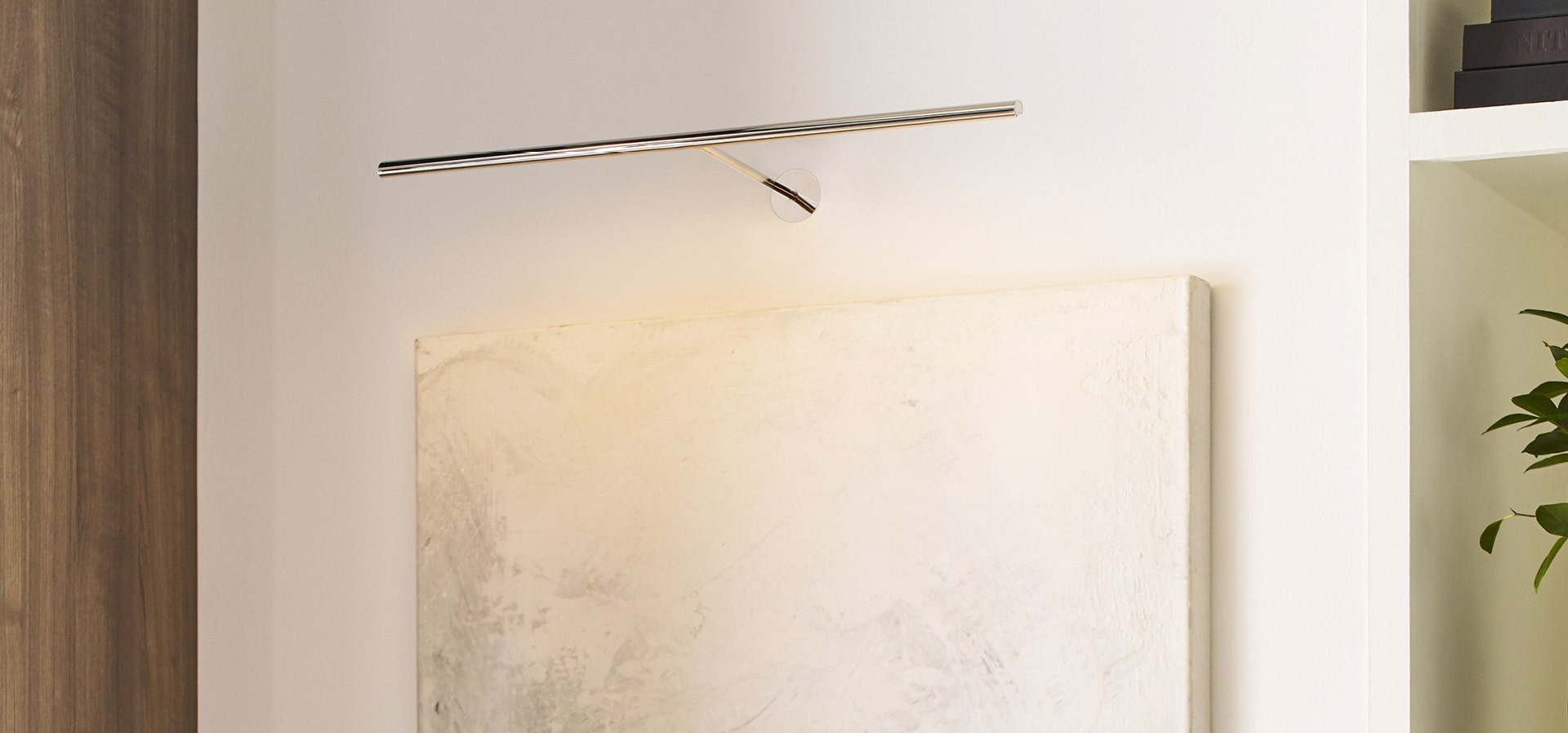
Showcasing Art With the Right Lights
Don’t just illuminate artwork in your home, present it in the right light and draw attention to the details that make each piece a one-of-a-kind. A contemporary photograph reveals rich variation in color when showcased free from glare. Cast in a glow, the texture of the medium is enhanced in a treasured painting.
Whether your wall art hangs alone or is featured in a gallery wall, thoughtful lighting of a unique work of art can transform how it is experienced in your home. Discover the perfect fixtures and their placement to present your collection beautifully with lighting that will preserve it for years to come.
How Should You Approach Lighting Art in Your Home?
-
Place your art for display where it can endure
-
Source lighting that will preserve your art
-
Position lighting sources to best present your art
Great art deserves to be seen. The decisions you make about where a piece lives in your home, how it is lit, and what surrounds it determine whether it is truly experienced or simply displayed. Placement, light source, fixture type, and finish all play a role, and each choice moves a display toward a presentation.
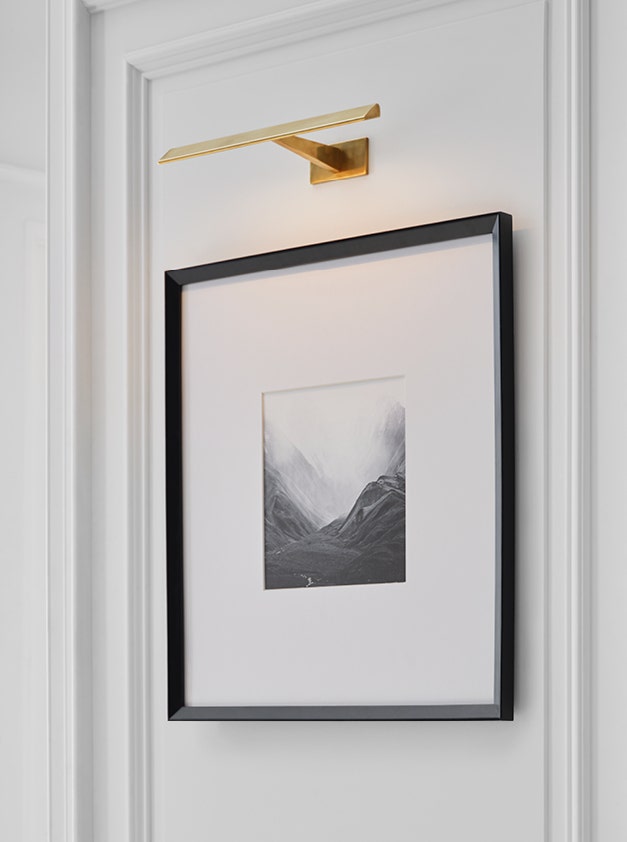
Where a piece of art lives matters as much as how it is lit. Display art away from direct sunlight. UV rays cause fading and damage that no framing, not even museum-quality, can fully prevent. A naturally shaded wall is the first act of preservation. The second is choosing the right light source to fill that space.
Why is LED Lighting Best for the Preservation and Presentation of Art?
-
Low Heat Emission
-
UV and IR protection
-
Energy efficiency
-
Adjustability
-
Color Accuracy
LED illumination has become the standard for displaying art, and for good reason. Where incandescent and halogen bulbs emit heat that warps and cracks, compromising a work of art over time, LED bulbs emit almost none.
Traditional bulbs produce ultraviolet and infrared radiation that fades color and deteriorates surfaces over years, whereas LEDs produce very little. Protect the art you love with the light you choose.
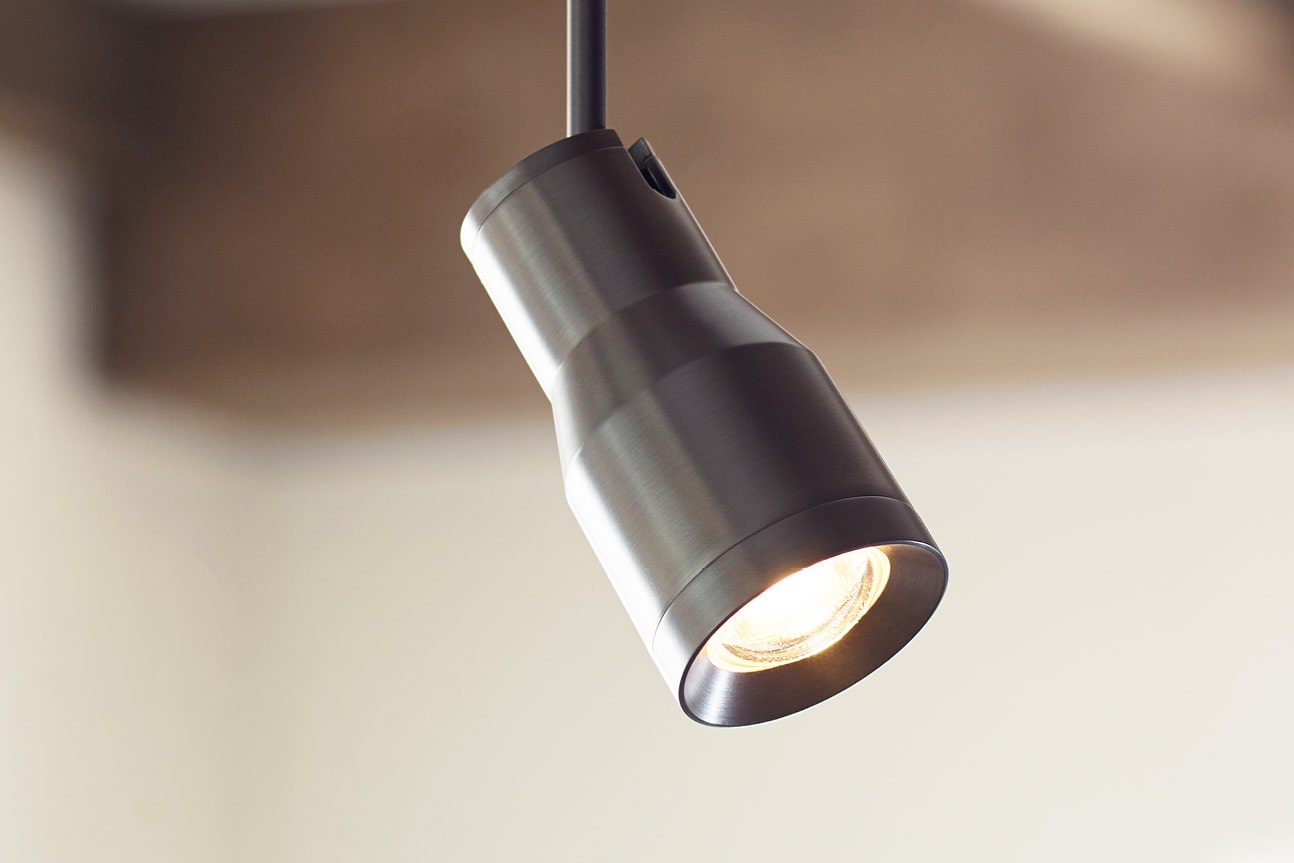
Beyond preservation, LED lighting offers exceptional color rendering and color temperature. Seek out warm, dimmable lighting fixtures that score 90 or above on the Color Rendering Index (CRI). The index evaluates the accuracy of white light compared to natural light on a scale of 0-100. Fixtures that score 90 and above deliver the most accurate color rendering in the home.
What should you look for in fixtures to light your art?
-
Dimmable Control – Manually functionality to adjust brightness
-
Color Rendering Index (CRI) – color accuracy score compared to natural light on scale of 0-100. Fixtures ideally score 90 and above
-
Color Temperature – The warmth or coolness of white light on the kelvin scale ideally measure 2700K or 3500K.
The flexibility of dimmable fixtures to calibrate lighting brightness to neither overpower your art nor allow it to recede supports a more considered approach to your artwork and surrounding finishes. Unique pieces may require color temperatures outside the preferred range of 2700K to 3500K in your home.
Color temperature is the measurement of warmth in white light on the Kelvin scale. LEDs hold these color metrics consistently after dark, reducing eye strain and ensuring the colors you see are the shades the artist intended. The accurate color perception of LEDs maintains an impeccable presentation at night and by day.
What Are the Best Types of Light for Illuminating Art in Your Home?
Choosing the right fixture is an act of curation in its own right. Each lighting type delivers a distinct quality of illumination, and knowing the difference is what separates a display from a presentation.
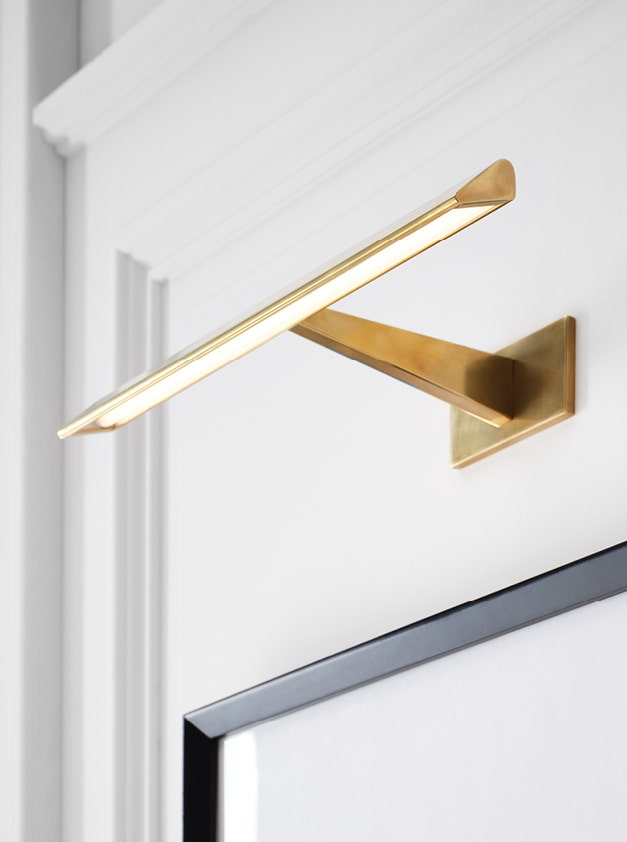
Mounted directly above or on the frame of the work, picture lights provide focused illumination precisely where needed. Available in wired and battery-operated versions, they are among the most versatile options for wall art, of any scale. Their proximity to the work makes them ideal for pieces that benefit from close, concentrated light.
Flexible and adjustable, track lighting allows multiple fixtures to be positioned at different angles along a single rail. Ideal for gallery walls or a series of works, track lighting can be reconfigured as your collection evolves. Its directional versatility makes it one of the most adaptable options for lighting art.
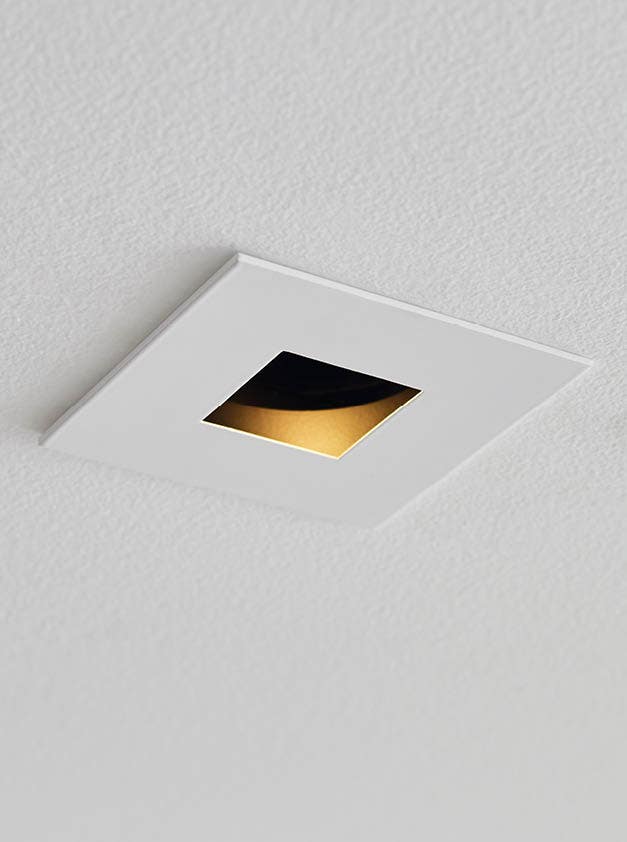
Also known as downlights, recessed fixtures are installed into the ceiling for a clean, architectural look. Adjustable recessed lights, like those in Visual Comfort & Co.'s Architectural Collection, can be angled to direct light precisely onto the work without occupying wall or floor space. Their minimal visual presence allows the art to remain the focal point.
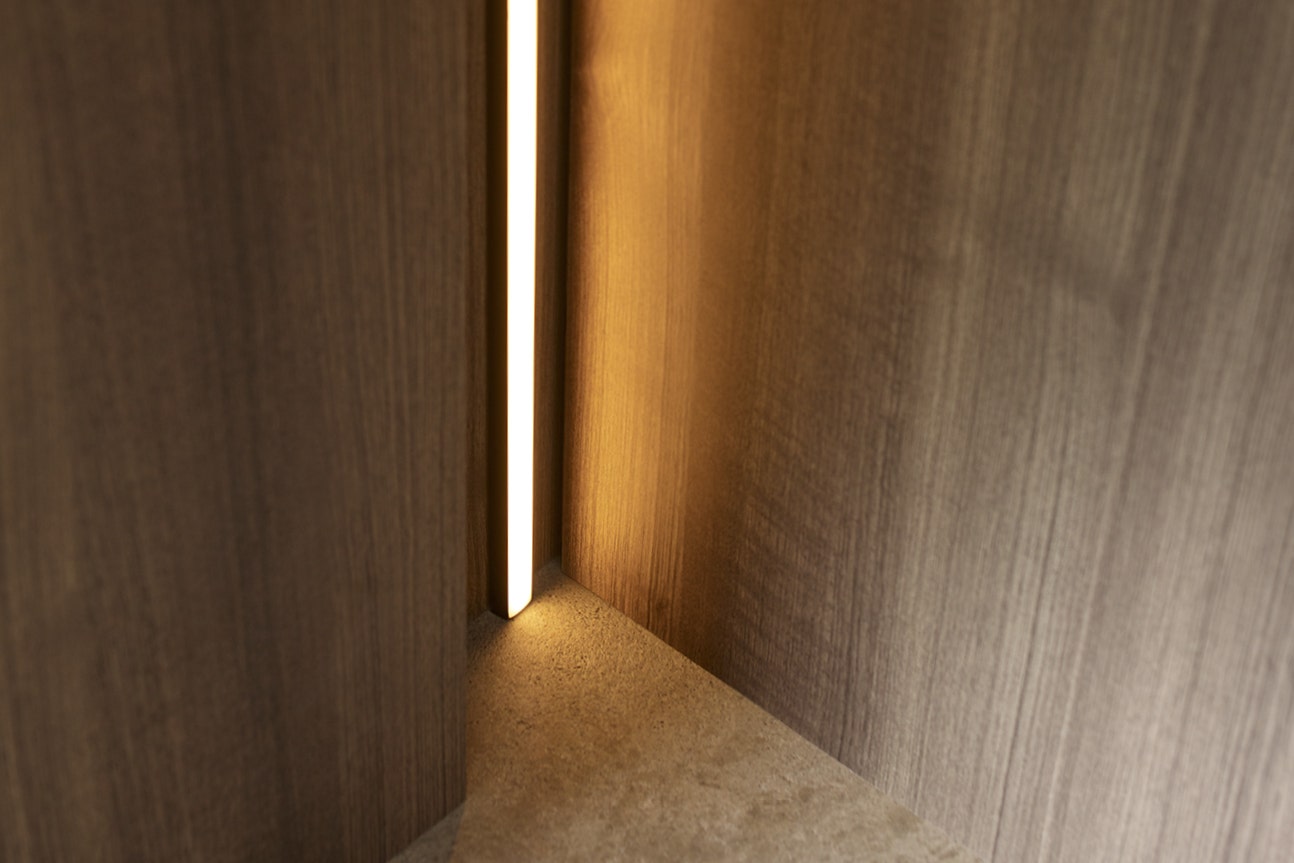
Position light systems vertically along a wall where art hangs for a wall grazing effect. Light hits the surface at a narrow angle, drawing the eye into the wall’s texture and the art. With a flexible, low-profile design, linear LED lights have many indoor applications in millwork and other architectural details. Sconces flanking wall art can achieve a similar effect.
How Do You Position and Angle Lighting for Your Art?
The placement and angle of your selected fixtures are just as important as the fixtures themselves. Position lights at a 30-degree angle from the artwork to minimize shadows and glare. By illuminating the work evenly without distraction, you also eliminate the risk of light reflecting directly back to the viewer's eyes.
The most considered presentations display art in layers of ambient and task light. Combining the angled ambient illumination of recessed lighting with picture light — task lighting — creates a well-lit display without harsh shadows.
The ambient layer ensures the entire piece is evenly seen while focused task lighting delivers definition in illumination across the surface of the wall art revealing every unique detail. Together they create a presentation of art to be experienced.
How Do You Select Lighting Finishes and Styles to Complement Your Art?
Extend the aesthetic of your art to your choice of lighting by reflecting stylistic elements within the imagery. The design of your display will become more cohesive.
The fixture becomes part of the presentation when you carry this intention further, mirroring the imagery's overall color temperature in the finish you select for your fixture, choosing metals that coincide with the piece's warm or cool tones.
Finishes that read warm include bronze, brass, rattan, and wood. Conversely, polished nickel and chrome read cool whereas brushed nickel and matte black can lean either way.
Polished Brass, Antique Brass
Offers a touch of nostalgia and charm to vintage art. The aged look brings out the character in pieces for a collected look.
Bronze
Ideal for traditional or classical artwork, these fixtures enhance the timeless elegance of a portrait, landscape, or still life with depth and sophistication.
Polished Nickel, Chrome
A sleek, minimalist look pairing well with modern or contemporary works of art. Its reflective quality enhances clean lines found in these pieces.
Matte Black
A great choice for industrial works as well as traditional art. The stark simplicity contrasts elegantly with more labored pieces but can also complement raw, unfinished works.
Rattan or Wood
Both complementing artwork with organic textures, these finishes are ideal for bucolic imagery depicting the natural world for a lived-in look.
Where to Start Lighting Your Art?
The fixture you choose to light a work of art is a curation decision that transforms a display into a presentation. Make it worthy of art pieces in your home. The right light does not just display your art. It completes it.
Explore Visual Comfort & Co.’s expansive range of picture lights, track lighting, and architectural solutions at our showroom nearest you. Our lighting specialists are here to guide your search for art in the right light.